πŸ” K-Series Authentication Error Guide

Diagnose and resolve common OAuth 2.0 / OIDC authentication errors across K-Series environments.

v2.0 Β· Updated

πŸ“‹ Environment Quick Reference

Environment Authorization Endpoint Token Endpoint Client ID Prefix
Trial auth.lsk-trial.app auth.lsk-trial.app devp-v2-demo
Production auth.lsk-prod.app auth.lsk-prod.app devp-v2
No errors match your search. Try different keywords.

Authorization Errors

🌐 Wrong Environment

Environment Mismatch #
⚠️ Warning
Always verify your authorization URL matches your client's environment. Mixing trial and production credentials is a common source of Client not found errors.
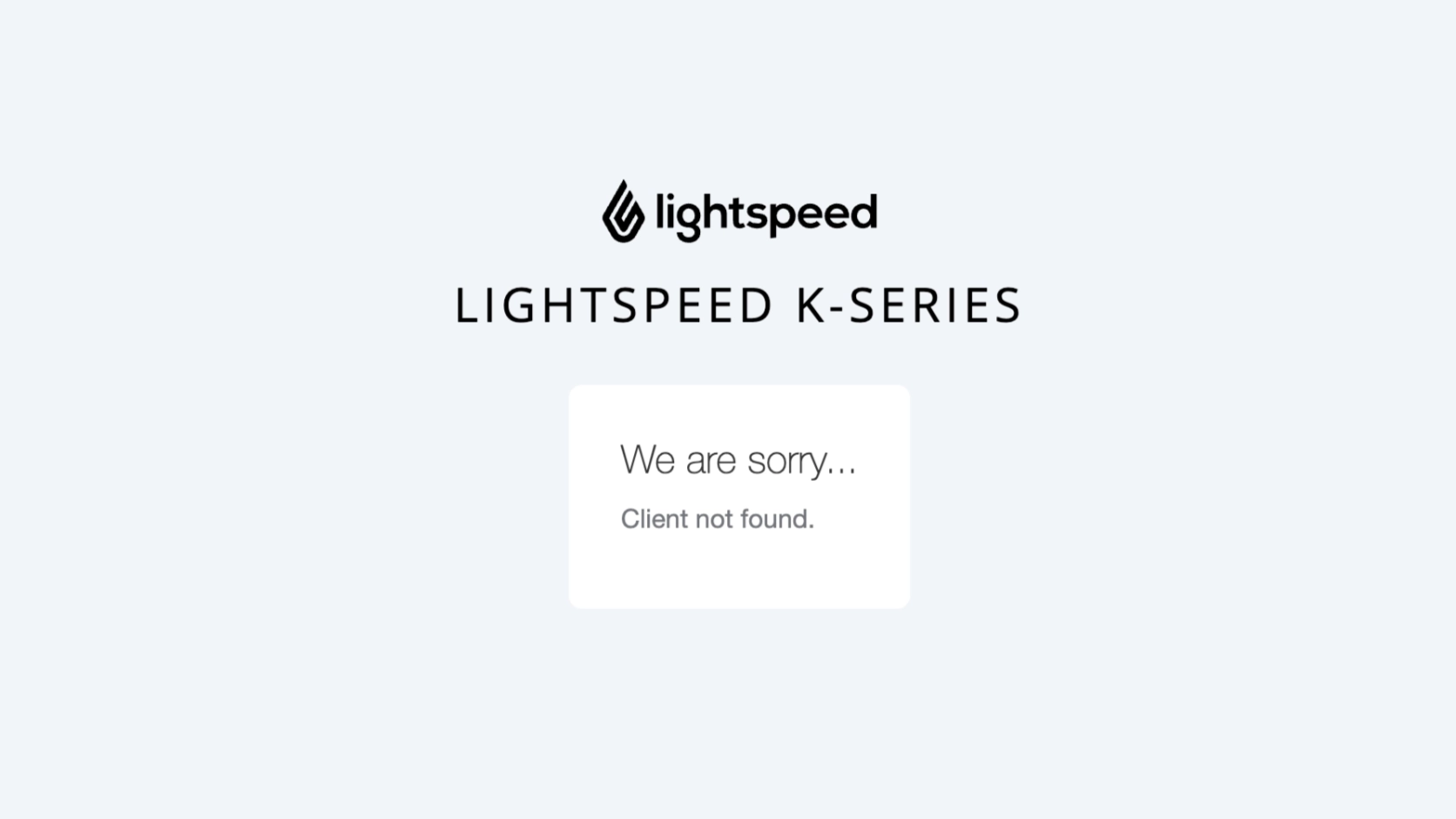
Client not found error screenshot
We are sorry… Client not found
Error Details & Example
Error: Client not found
  • Client ID: devp-v2-demo-dasxtrial-b69ffe954c5cd33c57a79a94780eb2ab β€” belongs to trial (prefix: devp-v2-demo)
  • Authorization URL used:
https://auth.lsk-prod.app/realms/k-series/protocol/openid-connect/auth
  ?response_type=code
  &client_id=devp-v2-demo-dasxtrial-b69ffe954c5cd33c57a79a94780eb2ab
  &scope=financial-api
  &redirect_uri=https%3A%2F%2Flocalhost%2F
πŸ“ Note
The URL targets lsk-prod.app (production), but the client_id is a trial client. These environments are isolated β€” clients are not shared.
βœ… Resolution
πŸ›  Fix
Match your authorization URL to your client's environment. Check the client ID prefix: devp-v2-demo β†’ use auth.lsk-trial.app; no demo suffix β†’ use auth.lsk-prod.app. Refer to the Environment Quick Reference table above.

πŸ”— Incorrect Redirect URI

URI Mismatch #
⚠️ Caution
The redirect_uri must be an exact string match β€” including protocol, path, and trailing slash. Even a single missing / will cause the request to fail.
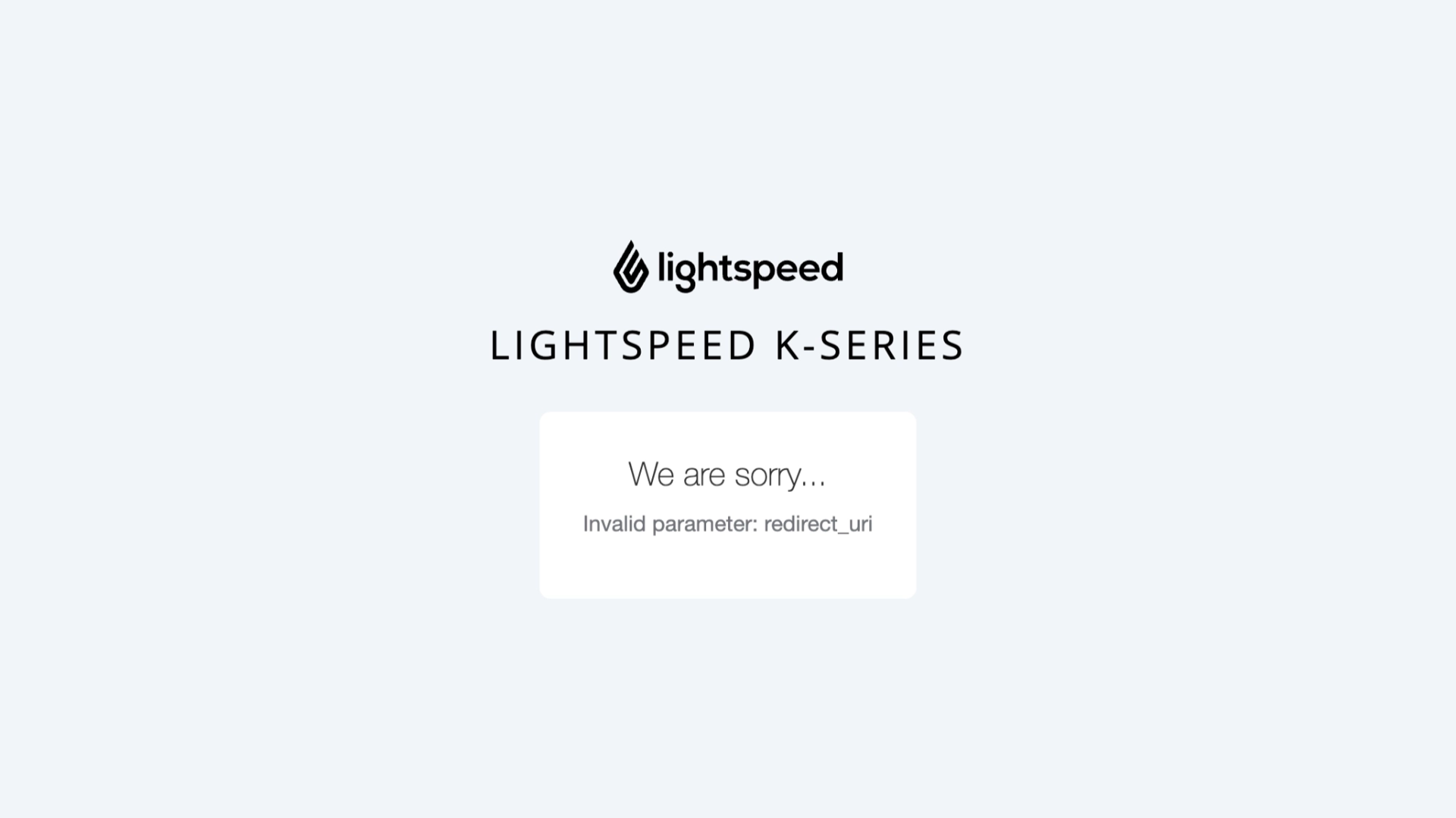
Invalid redirect URI error screenshot
We are sorry… Invalid parameter: redirect_uri
Error Details & Example
Error: Invalid parameter: redirect_uri
Context Value
Used in request https://localhost
Registered on server https://localhost/

Common causes:

  • Trailing slash missing or incorrectly added
  • Typo or character encoding mismatch
  • Using http:// instead of https://
βœ… Resolution
πŸ›  Fix
Copy the exact redirect URI from the API credential provisioning email or developer portal. Compare character-by-character β€” pay attention to trailing slashes, protocol scheme, and URL encoding. If you need the redirect URI updated, contact TPS with your client ID.

πŸ”‘ Invalid Scope

Scope Error #
πŸ“Œ Important
Scope names must exactly match the values configured on the authorization server. Underscores vs. hyphens are a frequent mistake.
Error Details, Valid Scopes & Example

Error URL returned:

https://localhost/?error=invalid_scope
  &error_description=Invalid+scopes%3A+financial-api+items+offline_access+orders-api
  &iss=https%3A%2F%2Fauth.lsk-prod.app%2Frealms%2Fk-series

Common mistakes:

❌ Invalid βœ… Correct
financial_api financial-api
items-api items

Valid scopes for K-Series clients:

  • financial-api
  • orders-api
  • items
  • offline_access
  • staff-api
πŸ’‘ Tip
Multiple scopes must be space-delimited before URL encoding. Example: scope=financial-api%20orders-api%20items
βœ… Resolution
πŸ›  Fix
Cross-reference your requested scopes against the valid scope list above. Ensure you're using hyphens where required (not underscores) and that scope names are space-separated in the raw value before URL encoding. Only request scopes your client has been provisioned for.

πŸ‘€ Incorrect K-Series User Credentials

Login Error #
⚠️ Warning
Trial and production environments maintain separate user directories. Production credentials will not work in a trial environment and vice versa.
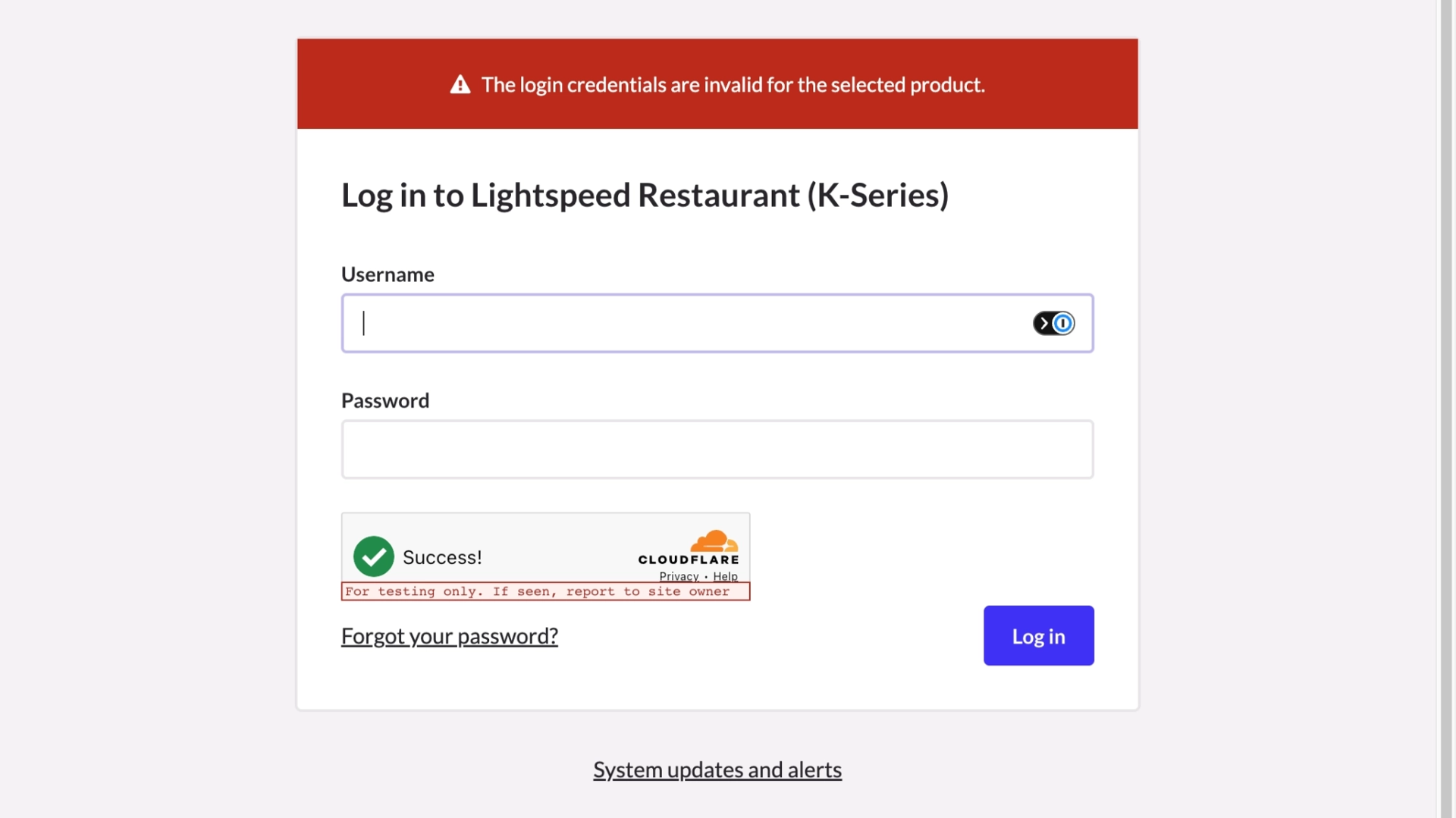
Invalid login credentials screenshot
Invalid username or password
Possible Causes
  • Username or password is incorrect
  • Using production credentials in a trial environment (or vice versa)
  • The account does not exist in the selected product/realm
  • Account may be locked or disabled
βœ… Resolution
πŸ›  Fix
Confirm you're logging in to the correct environment (trial vs. production). Verify the username and password. If the account may be locked, contact TPS to check the account status in the appropriate realm.

Token Exchange Errors

⏱️ Invalid Code Grant

Token Exchange 400 #
⚠️ Caution
Authorization codes are single-use and expire in approximately 15 seconds. Do not reuse or cache them.
Possible Causes & Response

Possible Causes:

  • Authorization code has expired (~15 second window)
  • Code has already been used (codes are one-time use)
  • Code is malformed, truncated, or contains a typo

Response:

{
  "error": "invalid_grant",
  "error_description": "Code not valid"
}
βœ… Resolution
πŸ›  Fix
Restart the authorization flow to obtain a fresh authorization code. Ensure your application exchanges the code for tokens immediately after receiving it β€” automate this step rather than copying manually. Never reuse a code.

πŸ”’ Invalid Client or Credentials

Client Auth 401 #
πŸ“Œ Important
The Authorization header must be present and correctly formatted as Basic base64(client_id:client_secret).
Possible Causes & Response

Possible Causes:

  • Authorization header is missing entirely
  • Credentials are not Base64-encoded
  • client_id or client_secret is incorrect
  • Using the wrong client credentials for the environment

Response:

{
  "error": "invalid_client",
  "error_description": "Invalid client or Invalid client credentials"
}
βœ… Resolution
πŸ›  Fix
Generate the Base64 value and set the header correctly:
# Generate the Base64 value
echo -n "client_id:client_secret" | base64

# Set the header
Authorization: Basic <base64_value>
πŸ’‘ Tip
Double-check you're using the correct client credentials for the target environment. The -n flag in echo is critical β€” without it, a newline character is appended, producing an incorrect Base64 value.

↔️ Incorrect Redirect URI (Token Exchange)

URI Mismatch 400 #
⚠️ Warning
The redirect_uri in the token exchange request must be identical to the one used in the original authorization request β€” even though no redirect actually occurs at this step.
Possible Causes & Response

Possible Causes:

  • redirect_uri in the token request doesn't match the authorization step
  • Trailing slash added or removed between steps
  • URL encoding differences between requests

Response:

{
  "error": "invalid_grant",
  "error_description": "Incorrect redirect_uri"
}
βœ… Resolution
πŸ›  Fix
Use the exact same redirect_uri value in both your authorization request and your token exchange request. Store the value in a variable or constant to prevent drift. Compare the raw strings β€” even URL encoding differences will cause a mismatch.

Refresh Token Errors

πŸ” Invalid Refresh Token

Refresh 400 #
⚠️ Caution
Refresh tokens are long-lived but not permanent. An expired, reused, or malformed refresh token cannot be recovered β€” a full re-authentication is required.
Possible Causes
  • Refresh token has passed its expiry window
  • Token was already used and the server enforces rotation
  • Refresh token is malformed or contains a transcription error
  • Token belongs to a different client or environment
βœ… Resolution
πŸ›  Fix
Re-authenticate the user through the full authorization flow to obtain a new refresh token. Implement token rotation handling in your client: when a refresh fails with invalid_grant, redirect the user back through the authorization flow automatically rather than surfacing a raw error. Ensure offline_access is included in your requested scopes to receive refresh tokens.

Client Configuration Errors

🚫 Unauthorized Client

Grant Type 400 #
πŸ“Œ Important
This error occurs when the client attempts to use a grant_type that has not been enabled for it on the authorization server.
Possible Causes & Response

Possible Causes:

  • Client is not configured for the authorization_code grant type
  • Client is attempting client_credentials flow but is only approved for auth code flow
  • Attempting to use refresh_token grant but rotation or refresh is not enabled
  • Client configuration was changed or provisioned incorrectly

Response:

{
  "error": "unauthorized_client",
  "error_description": "Client not allowed for direct access grants"
}
βœ… Resolution
πŸ›  Fix
Confirm the grant type(s) your client has been provisioned for. If you require a different grant type (e.g., client_credentials), contact TPS to update your client configuration. The most common K-Series integration flow is authorization_code with PKCE.